Knowledge Centre
The Behavioral Logic of
Survival and Self-Defence

The Behavioral Logic of Survival and Self-Defence
Long before complex cognition emerged, survival depended on a handful of deeply embedded behavioral patterns. Among these, feeding, fleeing, fighting, and reproducing represent four foundational strategies that organisms have developed over evolutionary time to meet the basic demands of life. Ethologists such as Niko Tinbergen describe these as the “Four Fs” of survival—conserved biological responses encoded into the nervous systems and hormonal machinery of species ranging from insects to primates.[1] [2] Together, they form a behavioral scaffold that enables life to persist, adapt, and respond to threat.[3]
The Four F’s of Survival
Each of these core behaviors contributes to survival in its own way:
i) Feeding secures energy and nutrients, the most basic requirement for sustaining life. By fueling metabolism, feeding enables the repair, growth, and movement upon which all other survival functions depend.[4] As Ernst Mayr emphasized, energy acquisition underlies every adaptive function in biology.[5] [6] Beyond sustaining the individual, competition over food often extends into territoriality, dominance, and defensive action. Feeding is both the foundation of survival and a driver of conflict and boundary-setting, a point also noted by E.O. Wilson in his studies of social behavior.[7] [8]
ii) Fleeing remains the most widespread strategy for avoiding harm. Walter Cannon, who first described the “fight-or-flight” response in 1932, showed how perception of danger mobilizes rapid physiological changes: adrenaline surges, cortisol floods the system, muscles tense, perception narrows, and awareness heightens.[9] As Robert Sapolsky explains, this vertebrate-wide stress-response system—mediated by the hypothalamic–pituitary–adrenal (HPA) axis—illustrates how biology prepares organisms for immediate survival.[10] Even in humans, the reflex remains central to situational self-protection, showing that escape is often the first and most reliable path to survival.[11]
iii) Fighting, though energetically costly, functions as a last-resort defence to repel threats and protect vital interests such as territory, offspring, or bodily integrity. It becomes most critical when escape is impossible. According to John Maynard Smith, natural selection favors restraint in such contexts because full combat is risky and metabolically expensive; ritualized aggression such as dominance contests in primates or antler clashes in deer resolve disputes while minimizing injury.[12] Here, the link to defensive aggression is most apparent, as noted by Konrad Lorenz in his work on ritualized aggression.[13]
iv) Reproduction guarantees continuity of life beyond the individual, but it also introduces new vulnerabilities. Offspring are dependent, and reproductive success often demands additional forms of defence—securing mates, protecting young, or forming cooperative alliances. As Clutton-Brock and David Buss show, mate-securing commonly involves mate guarding and other competitive strategies to defend access against rivals.[14] [15] Protecting young is a central component of parental care across taxa—guarding eggs and offspring, provisioning, and post-independence defence—as Clutton-Brock details.[16] And forming cooperative alliances to raise and defend young—cooperative breeding with alloparental help—is well documented across birds and mammals, where helpers engage in provisioning and defence against predators, as Stacey & Koenig emphasize.[17] Kin protection, particularly among mammals and birds, extends self-preservation outward into parental and social defence; as Hamilton showed, such investment advances inclusive fitness—the genetic continuity of kin lines.[18]
From Instinct to Strategy
These behaviors go beyond simple reflexes. Even in lower animals they are coordinated, context-sensitive, and sometimes anticipatory.[19] They involve trade-offs between risk and reward, energy expenditure and safety—each strategy carrying costs that organisms must balance against survival and reproduction.[20] In humans, the same patterns are shaped by learning, culture, and symbolic reasoning. According to Joseph Henrich, cultural frameworks such as law, language, and martial traditions extend these biological imperatives into durable systems of cooperation and defence.[21] Human foresight extends this logic further, allowing us to anticipate danger, plan defensive measures in advance, and build cooperative strategies across time.[22] [23]
The capacity to defend oneself, therefore, does not exist in isolation. It emerges from this interrelated behavioral system that regulates energy, mitigates threat, and maximizes survival. As Dawkins reminds us in The Selfish Gene, self-defence is best understood as an inheritance of evolution rather than an invention of culture—a biological imperative that becomes the foundation for autonomy, agency, and moral responsibility.[24] This inheritance not only grounds individual survival but also provides the raw material that human cultures later formalize into structured systems of defence—from kin protection to martial traditions that codify these imperatives into disciplined practices.[25] To see what this inheritance means in evolutionary terms, we can examine how natural selection shaped defensive aggression into a survival trait.
Defensive Aggression in Evolution
Defensive aggression is an evolutionarily selected trait[26] rooted in life’s most basic imperative: to persist in the face of threat. It is best understood as neither a cultural artifact nor a product of conscious reasoning. As Ernst Mayr explained, traits that enhanced survival were preserved through natural selection regardless of conscious awareness.[27] Charles Darwin likewise described defensive instincts—such as threat displays and protective behaviors—as outcomes of selection pressures that favored persistence.[28] Organisms that developed effective defensive responses—whether physical, behavioral, or physiological—were more likely to survive, reproduce, and pass those traits to the next generation.[29]
Like other adaptive behaviors, defensive aggression is favored through natural selection because it enhances reproductive fitness—protecting not only the individual but, in many species, kin and offspring who share genetic investment.[30]
Defensive aggression exemplifies what some scholars call “situated Darwinism”: organisms are not passive recipients of selection pressures but active participants whose defensive repertoires help shape the contours of their evolutionary niches.[31]
This general logic, however, takes on more specific forms when we examine how defensive aggression actually functions across species.
Strategic Functions of Defensive Aggression
In evolutionary biology, such responses are considered functionally strategic, even if the organism is unaware of its “strategy.” A lizard that flares its body to scare off predators, a wasp that stings in response to intrusion, a primate that bares its teeth in a threat display, or birds that mob an intruder—all exemplify instinctive behaviors that deter predation or prevent injury. [32] These actions are driven by survival necessity rather than malice. John Alcock also highlights how such instinctive behaviors represent evolved modules of defence, calibrated to specific ecological pressures.[33]
Aggression, however, is metabolically expensive and risky. Fighting can lead to wounds, stress, or death.[34] For this reason, natural selection has consistently favored restraint and economy rather than indiscriminate combat. As Niko Tinbergen observed in his ethological studies, defensive aggression is often conditional—calibrated to the intensity of threat and the absence of better alternatives, such as fleeing or hiding.[35] Bluffing displays, warning postures, and escalation ladders often delay actual violence. As Alcock notes, these escalation ladders conserve energy while still protecting viability. [36] Defensive behavior tends not to be the first response; when triggered, it often becomes the necessary and decisive one.
The logic of such restraint has also been modeled formally. John Maynard Smith’s game-theoretic work demonstrates why strategies of bluff, display, and conditional aggression endure: they are evolutionarily stable solutions that preserve survival value while minimizing combat costs. [37] Richard Dawkins later expanded this framework, showing how restraint fits into the broader structure of gene-level selection, where behaviors that reduce unnecessary risk enhance the long-term propagation of genetic lineages. [38]
In this way, defensive aggression emerges as a flexible, context-sensitive toolkit that balances the risks of injury against the imperative of survival.[39] Rather than random or indiscriminate, it is strategic—an evolved solution that enables organisms to resist harm while conserving resources for the broader work of survival and reproduction.
The Human Dimension
The strategic restraint observed in other animals marks an evolutionary bridge to the human case. Our nervous systems still mobilize with the same reflexes: surges of adrenaline, muscle priming, narrowed perception.[40] As Robert Sapolsky explains, these stress responses are deeply conserved mechanisms for immediate survival,[41] and—as Randolph Nesse emphasizes—emotions such as fear and anger evolved as adaptive programs that mobilize protective responses, safeguarding bodily integrity and enhancing reproductive fitness. [42] Yet unlike other animals, humans extend these reflexes and emotions through memory, foresight, language, and moral reflection, transforming immediate survival programs into deliberate and ethical choices. We can imagine possible threats before they occur, evaluate proportional responses, and articulate reasons for our actions.[43] These higher faculties do not replace the biological logic of survival; they build upon it. The adaptive strategies of our ancestors persist beneath cultural overlays, shaping the boundaries of what responses remain possible.[44]
This biological perspective forms the foundation upon which later claims about moral and legal justification must stand. The justification of self-defence rests less on social decree than on necessity itself: life, autonomy, agency, and moral personhood exist in a precarious balance and rely upon it.[45] If defensive aggression expresses this precariousness, biological organization provides the structure that resists it. Defense begins here, at the level of life itself: [46] without it, future viability collapses, while effective strategies are reinforced through evolutionary feedback loops that privilege those agents able to secure their persistence. [47]
Conclusion: Self-Defence as a Biological Imperative
Seen in this light, defensive aggression becomes more than an instinct—it is both a biological safeguard and the strategic backbone of survival. This recognition prepares the way for the next stage of analysis: how the structural organization of living systems anchors and extends this defensive logic.
What emerges from this analysis is clear: self-defence is not a cultural invention or a modern legal construct, but a biological imperative deeply rooted in the fabric of life. Feeding, fleeing, fighting, and reproducing form the behavioral scaffold upon which survival depends, and defensive aggression is their most decisive expression when threats cannot be avoided.
For humans, these ancient strategies are refracted through higher cognition, culture, and ethics. We anticipate, plan, and reflect, but the biological foundation remains unchanged. Recognizing this continuity allows us to see self-defence as more than instinct—it is the evolutionary backbone of autonomy and the ground upon which moral and legal justifications must stand.
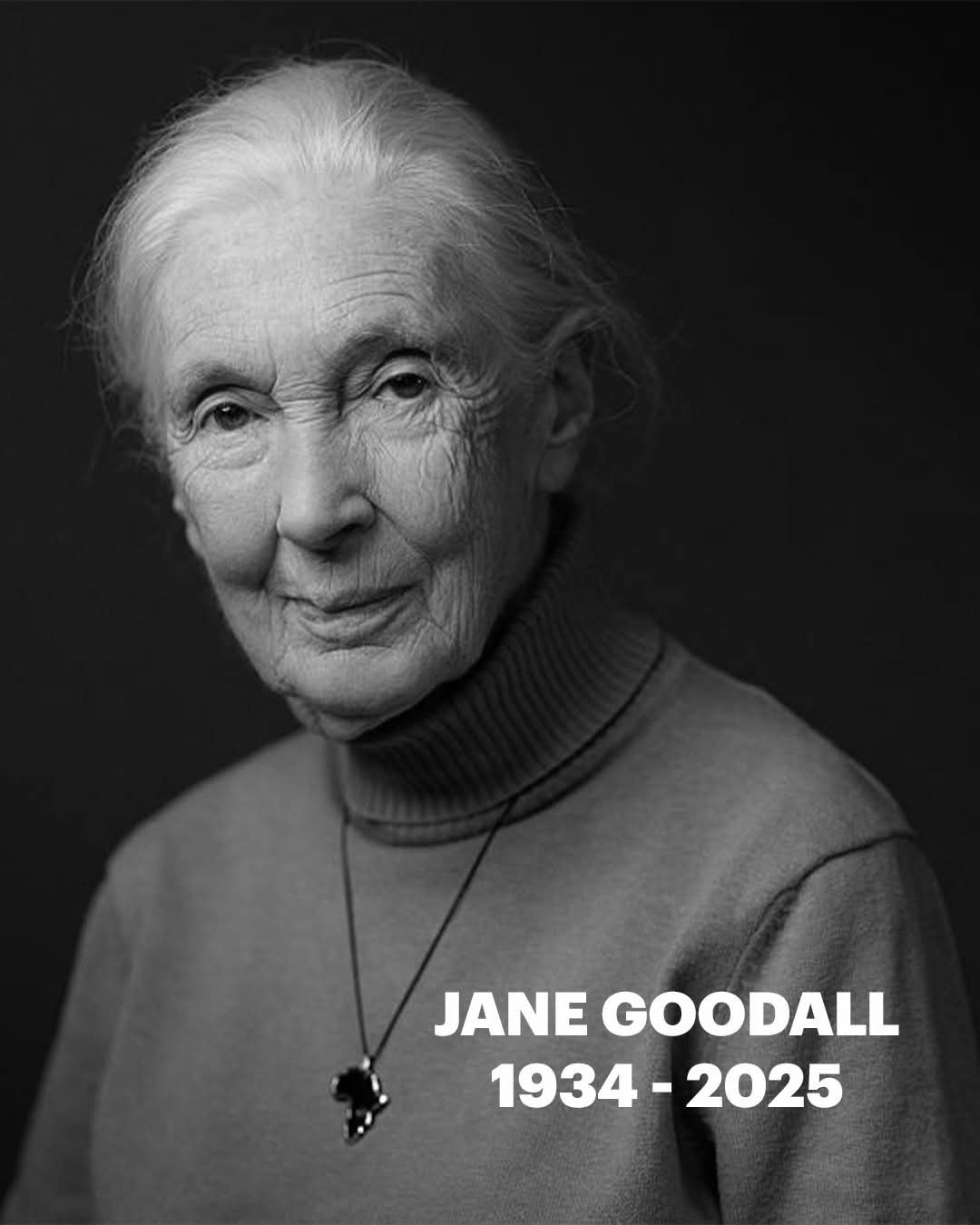
In Memory of Jane Goodall (1934-2025)
→ Excerpt from our flagship publication here.
About The Author

Nathan A. Wright
Nathan is the Managing Director and Chief Instructor at Northern Sage Kung Fu Academy, and Chief Representative of Luo Guang Yu Seven Star Praying Mantis in Canada and China. With over 25 years of experience living in China, he is deeply committed to passing on traditional martial arts in its most sincere form. As part of his passion Nathan regularly writes on related topics of self-defense, combat, health, philosophy, ethics, personal cultivation, and leadership. Email Nathan if you have questions on this article, or if you have interest in learning more about studying traditional Seven Star Praying Mantis Kung Fu.
End Notes
[1] Niko Tinbergen, The Study of Instinct (Oxford: Clarendon Press, 1951), 100–110.
[2] Niko Tinbergen, The Study of Instinct (Oxford: Clarendon Press, 1951), 132–136.
[3] Ernst Mayr, This Is Biology: The Science of the Living World (Cambridge, MA: Harvard University Press, 1997), 147–153.
[4] Bruce Alberts et al., Molecular Biology of the Cell, 6th ed. (New York: Garland Science, 2014), 651–658.
[5] Ernst Mayr, This Is Biology: The Science of the Living World (Cambridge, MA: Harvard University Press, 1997), 90–97.
[6] Ernst Mayr, This Is Biology, 153–158.
[7] Edward O. Wilson, Sociobiology: The New Synthesis (Cambridge, MA: Harvard University Press, 1975), 123–129.
[8] Patrick Bateson and Paul Martin, Design for a Life: How Behaviour Develops (London: Jonathan Cape, 1999), 46–54.
[9] Walter B. Cannon, The Wisdom of the Body (New York: W. W. Norton, 1932), 227-233, 273–280.
[10] Robert M. Sapolsky, Behave: The Biology of Humans at Our Best and Worst (New York: Penguin Press, 2017), 37–46.
[11] Sapolsky, Why Zebras Don’t Get Ulcers, 67–72.
[12] John Maynard Smith, Evolution and the Theory of Games (Cambridge: Cambridge University Press, 1982), 78–82.
[13] Konrad Lorenz, On Aggression, trans. Marjorie Kerr Wilson (New York: Harcourt, Brace & World, 1966), 35–42.
[14] Clutton-Brock, Tim. “Sexual Selection in Males and Females.” Science 318 (2007): 1882–1885;Buss, David M. “Human Mate Guarding.” Neuroendocrinology Letters 23, Suppl. 4 (2002): 23–29, esp. 23–24.
[15] Peter B. Stacey and Walter D. Koenig, Cooperative Breeding in Birds: Long-Term Studies of Ecology and Behavior (Cambridge: Cambridge University Press, 1990), 5–12.
[16] Clutton-Brock, T. H. The Evolution of Parental Care. Princeton: Princeton University Press, 1991, 13–27.
[17] Stacey, Peter B., and Walter D. Koenig. “Introduction.” In Cooperative Breeding in Birds: Long-Term Studies of Ecology and Behaviour, ix–xviii, esp. ix–x. Cambridge: Cambridge University Press, 1990.
[18] Hamilton, W. D. “The Genetical Evolution of Social Behaviour. I.” Journal of Theoretical Biology 7, no. 1 (1964): 1–16, esp. 1–4.
[19] Tinbergen, The Study of Instinct, 140–145.
[20] Peter Sterling, What Is Health? Allostasis and the Evolution of Human Design (Cambridge, MA: MIT Press, 2020), 15–22.
[21] Joseph Henrich, The Secret of Our Success: How Culture Is Driving Human Evolution, Domesticating Our Species, and Making Us Smarter (Princeton, NJ: Princeton University Press, 2015), 93–101.
[22] Sapolsky, Behave, 149–156.
[23] Henrich, The Secret of Our Success, 45–50.
[24] Richard Dawkins, The Selfish Gene, rev. ed. (Oxford: Oxford University Press, 2006), 34–38, 55-62.
[25] Dawson, Martial Arts and Philosophy: Beating and Nothingness (Chicago: Open Court, 2010), 11–15.
[26] Charles Darwin, The Descent of Man, and Selection in Relation to Sex (London: John Murray, 1871); see also John Alcock, Animal Behavior: An Evolutionary Approach, 10th ed. (Sunderland, MA: Sinauer Associates, 2013).
[27] Ernst Mayr, This Is Biology: The Science of the Living World (Cambridge, MA: Harvard University Press, 1997), 90–97, 153-158.
[28] Charles Darwin, The Expression of the Emotions in Man and Animals, 2nd ed., ed. Paul Ekman (New York: Oxford University Press, 1998), 123–127.
[29] Charles Darwin, On the Origin of Species (London: John Murray, 1859), 61–62.
[30] W. D. Hamilton, “The Genetical Evolution of Social Behaviour. I,” Journal of Theoretical Biology 7, no. 1 (1964): 1–16.
[31] Xabier E. Barandiaran, Ezequiel A. Di Paolo, and Marieke Rohde, “Defining Agency: Individuality, Normativity, Asymmetry, and Spatio-Temporality in Action,” Adaptive Behavior 17, no. 5 (2009): 367–374.
[32] Niko Tinbergen, The Study of Instinct (Oxford: Clarendon Press, 1951), 140–145.
[33]John Alcock, Animal Behavior: An Evolutionary Approach, 10th ed. (Sunderland, MA: Sinauer Associates, 2013), 281–286.
[34] Craig A. Anderson and Brad J. Bushman, “Human Aggression,” Annual Review of Psychology 53 (2002): 27–51.
[35] Niko Tinbergen, The Study of Instinct (Oxford: Clarendon Press, 1951), 145–150.
[36] John Alcock, Animal Behavior: An Evolutionary Approach, 10th ed. (Sunderland, MA: Sinauer Associates, 2013), 288–291.
[37] John Maynard Smith, Evolution and the Theory of Games (Cambridge: Cambridge University Press, 1982), 18–25.
[38] Richard Dawkins, The Selfish Gene, 30th anniversary ed. (Oxford: Oxford University Press, 2006), 67–73.
[39] John Maynard Smith, Evolution and the Theory of Games (Cambridge: Cambridge University Press, 1982), 24–29.
[40] Walter B. Cannon, The Wisdom of the Body (New York: W.W. Norton, 1932), 227–233.
[41] Robert Sapolsky, Why Zebras Don’t Get Ulcers, 3rd ed. (New York: Holt Paperbacks, 2004), 39–45.
[42] Randolph M. Nesse, Good Reasons for Bad Feelings: Insights from the Frontier of Evolutionary Psychiatry (New York: Dutton, 2019), 60–68.
[43] Antonio Damasio, Self Comes to Mind: Constructing the Conscious Brain (New York: Pantheon, 2010), 184–190.
[44] Evan Thompson, Mind in Life: Biology, Phenomenology, and the Sciences of Mind (Cambridge, MA: Harvard University Press, 2007), 158–162.
[45] Joel Feinberg, Harm to Self, vol. 3 of The Moral Limits of the Criminal Law (New York: Oxford University Press, 1986), 141–146.
[46] Hans Jonas, The Phenomenon of Life: Toward a Philosophical Biology (New York: Harper & Row, 1966), 84–90.
[47] John Maynard Smith, Evolution and the Theory of Games (Cambridge: Cambridge University Press, 1982), 78–82.
Other Articles