Knowledge Centre
The Meaning of Lineage and Transmission
The Meaning of Lineage and Transmission
Lineage is the chain of human relationships linking present-day practitioners to the founders of a tradition. In Chinese martial arts, it is more than a historical roster — it is a living inheritance of skill, knowledge, and ethos, sustained through successive generations. Each link in that chain carries both the art’s technical repertoire and the moral responsibility to preserve and represent it faithfully.
Transmission is the active process by which this inheritance is carried forward. If lineage provides structural continuity, transmission is its lifeblood — the deliberate and often personal passing on of techniques, tactics, strategies, principles, interpretive frameworks, and values. It may take the form of formal instruction, direct apprenticeship, ceremonial recognition, oral teaching, written records, or, most profoundly, the embodied example of a master in practice.
This process is imbued with a deep sense of reverence. In the teacher–student relationship (師徒關係 shī–tú guānxì), there is a parallel to the familial bond, often viewed as an extension of the parent-child dynamic. The teacher is not merely an instructor, but a moral guide, mentor, custodian, and even secondary parent, entrusted with shaping the student’s development in skill, character, and life conduct. In turn, the student is expected to honor the teacher with the same respect and gratitude afforded to family — a related expression of xiao, or family reverence. This respect manifests in loyalty, trust, and the faithful preservation of the art as it was entrusted.
Confucianism here emphasizes the teacher’s role as a transmitter of both the Dao (The Way, 道) and moral principle (li 理), demanding respect not only for the teacher’s knowledge and experience, but for the tradition they embody. In the martial arts context, this means the master’s responsibility extends beyond mere technical instruction to include ethical teachings necessary to wield skill rightly. Through this sacred relationship, the tradition is preserved and passed on not merely as a body of knowledge, but as a living, evolving moral practice.
Lineage without active transmission becomes an empty record; transmission without lineage risks drifting from the deeper framework that gives the art coherence and authority. Participation with reciprocity and wholeheartedness affords meaning. In a traditional system, these are bound by an ethic of custodianship — the understanding that to inherit the art is to accept responsibility for its preservation and principled development.
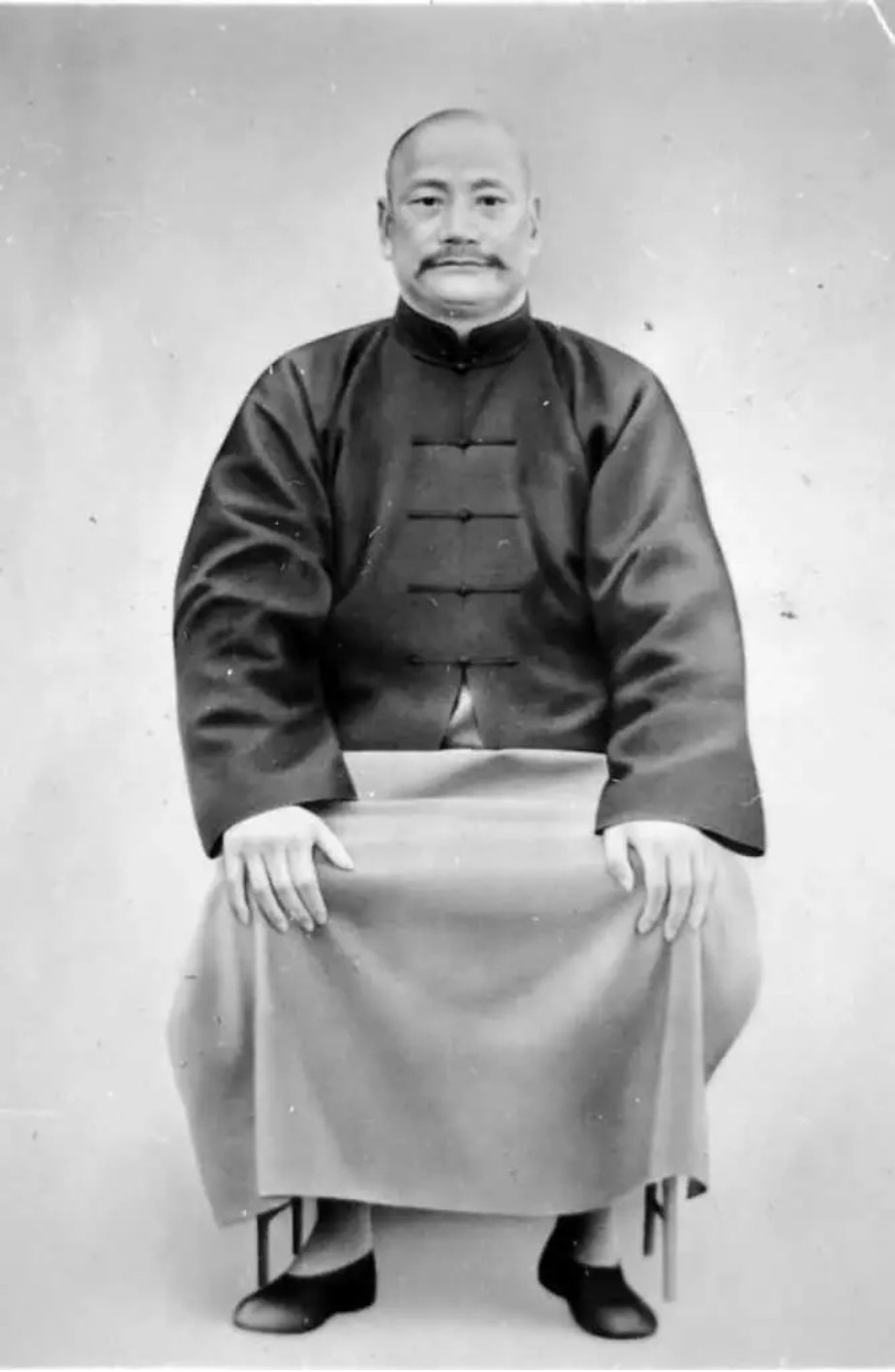
Master Luo Guang Yu (1888-1944)
In Seven Star Praying Mantis Kung Fu, lineage is a sacred fellowship that connects today’s practitioners with venerable masters of the past. It begins with the legendary founder Wang Lang and second-generation master Sheng Xiao Dao Ren, continuing through recorded history with Li San Jian (c. 1821), Wang Rong Sheng (c. 1854), Fan Xu Dong (1841–1925), Luo Guang Yu (1888–1944), and Lin Bo Yan (1903–1990. Today, within our sub-family lineage, this living tradition is carried forward by masters such as Xu Jin Ge in Singapore and Kai Uwe Pel in Germany, who continue to preserve and transmit its authentic spirit.
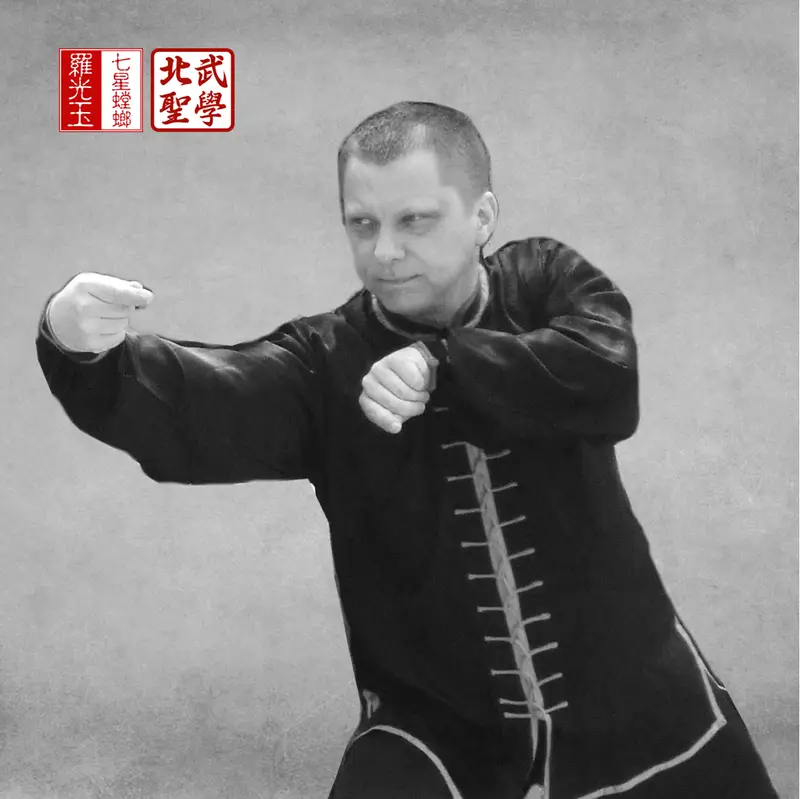
Master Kai Uwe Pel (1964.)
This deep connection bonding nine generations over two-hundred years is not merely symbolic—it is the living conduit through which the art’s combative, longevity, and philosophical dimensions have been refined and safeguarded across generations. Transmission in this context is deeply embodied: less an abstract act of “teaching” than a lived process of absorbing principles through sustained, mindful practice within a community dedicated to carrying the art forward.
Seen in this light, lineage and transmission are not merely historical record or technical pedagogy. They are the deeply human mechanisms by which a martial tradition survives the passage of time, adapts to changing contexts without losing its essence, and maintains the living unity that makes it more than the sum of its parts.
Contact us to enquire more about our combative, meditative and philosophical practices.
About The Author
Nathan A. Wright
Nathan is the Managing Director and Chief Instructor at Northern Sage Kung Fu Academy, and Chief Representative of Luo Guang Yu Seven Star Praying Mantis in Canada and China. With over 25 years of experience living in China, he is deeply committed to passing on traditional martial arts in its most sincere form. As part of his passion Nathan regularly writes on related topics of self-defense, combat, health, philosophy, ethics, personal cultivation, and leadership. Email Nathan if you have questions on this article, or if you have interest in learning more about studying traditional Seven Star Praying Mantis Kung Fu.
Related Articles
→ Current State of Praying Mantis Kung Fu (Sept. 2025)
→ What Is Tradition?
→ What Is a Martial Tradition?
→ Combat as a Core Element of the Praying Mantis Tradition (Sep. 2025)
→ Longevity as a Core Element of the Praying Mantis Tradition
→ Character Building as a Core Element of the Praying Mantis Tradition
→ The Meaning of Lineage and Transmission
→ The Living Unity of Tradition in Praying Mantis Kung Fu
→ Reflections on Tradition and Return to Meaning in Martial Practice (Aug. 2025)
→ More from our Knowledge Centre
Other Articles